- What is a flood?
A flood is a temporary submersion of areas that are normally dry.
It can be caused by:
- Intense and prolonged rainfall.
- Rivers or streams bursting their banks.
- Urban run-off during violent storms.
In the region, floods are often linked to Mediterranean or Cévenol weather events, which involve heavy rainfall over a short period of time.
- Why is the Var particularly affected?
Several factors increase the risk of flooding in the Var:
- Mountainous area and hydrographic network with numerous rivers (Argens, Gapeau, Nartuby, etc.) that can easily overflow.
- Mediterranean climate: intense rainfall occurring mainly in autumn and winter.
- The dangers of flooding
- Risks to human life: drowning, injury, isolation.
- Significant material damage to homes, businesses, and vehicles.
- Disruption of essential services: electricity, drinking water, and transport networks.
Vulnerable areas and populations:
- Neighbourhoods close to rivers or in low-lying areas.
- Ground-floor or basement dwellings.
- People with reduced mobility or those living alone.
- Alert levels
- Yellow alert: localised risk, monitor the situation.
- Orange alert: dangerous conditions, avoid travel and follow safety guidelines.
- Red alert: exceptionally severe event, major danger to the population.
Depending on the severity of the situation, the State services will activate the ORSEC Flood Response Plan to coordinate emergency operations and keep the public informed.
- What you should do
As a precaution:
- Be aware of the risks in your area (prevention plans, flood-prone areas).
- Make your home safer (move valuables to higher levels, install backflow prevention devices).
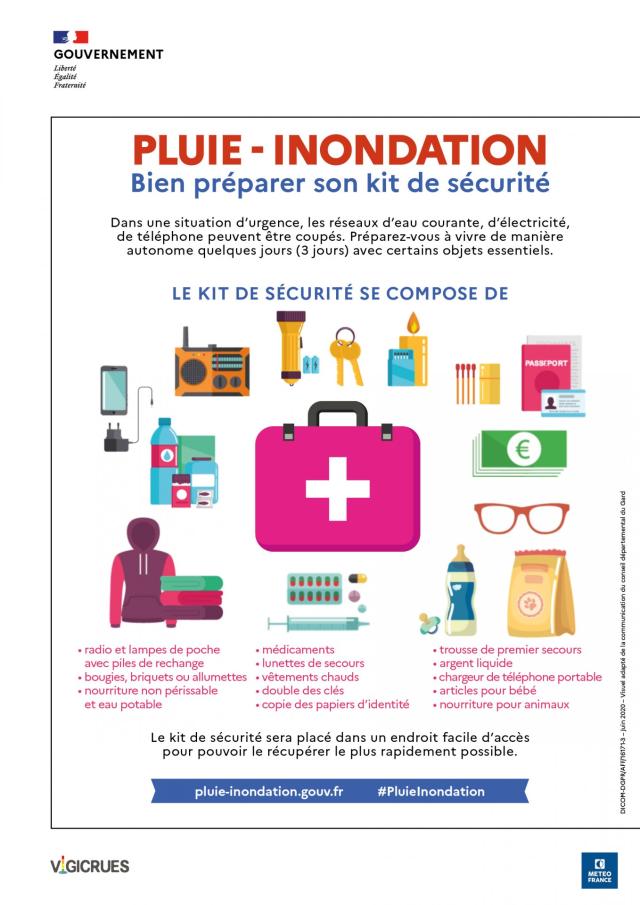
- Prepare an emergency kit (torch, water, battery-powered radio, ID documents).
In case of an alert:
- Avoid unnecessary travel.
- Move vehicles away from flood-prone areas.
- Take pets to safety.
During a flood:
- Take shelter on higher floors; never go down into basements.
- Do not use flooded roads or paths, either on foot or by car.
- Turn off electricity if you can do so safely.
- If you are in immediate danger
- Call 18 (Fire Brigade), 112 (European emergency number), or 114 (by SMS for the deaf or hard-of-hearing).
- Keep up-to-date with official instructions (local radio, official prefecture information).
- Do not try to retrieve belongings, your safety comes first.
- Useful links
- Windfinder
- Raintoday (iPhone)
- WeatherPro (Android)
- Vigicrues (only for “La Giscle river”)
- Windfinder
- TéléAlerte Grimaud
To receive live updates about the situation in Grimaud, sign up to TéléAlerte.
By registering your address, you’ll receive reliable information and be notified if you need to take specific precautions during extreme weather events.
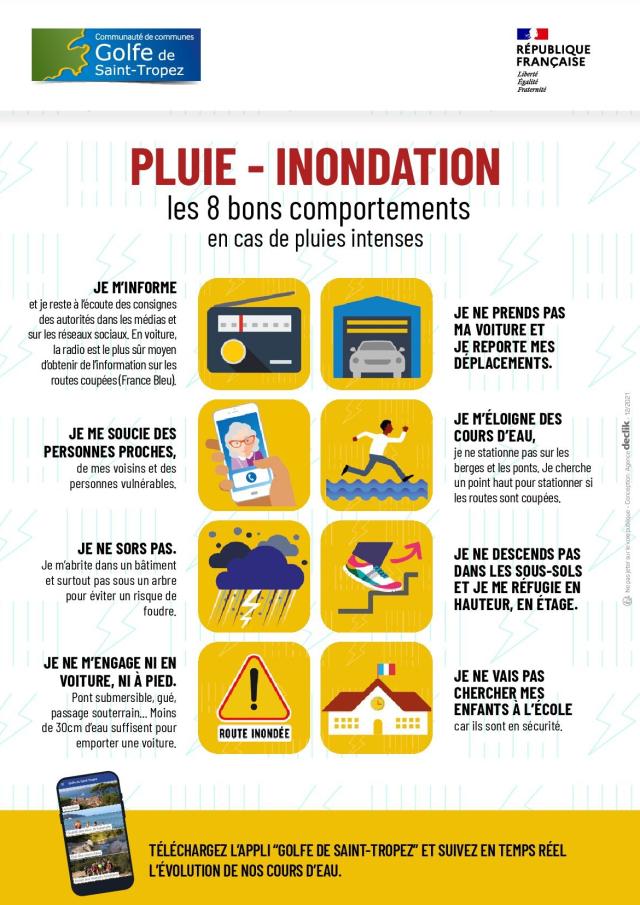
Bons Comportements Inondation 1