- What is a heatwave?
According to Météo-France, a heatwave is a prolonged episode (lasting at least three consecutive days) of very high temperatures both day and night. Temperatures remain high even at night, preventing the body from recovering.
It differs from a simple spell of hot weather by its duration and intensity, and can have serious consequences for health and the environment.
- Why is the Var particularly affected?
The Var’s Mediterranean climate means that heatwaves are common:
- Dry, sunny summers with little rainfall.
- High daytime temperatures and warm nights, especially along the coast and in urban areas.
- The urban heat island effect, which makes the heat even more unbearable.
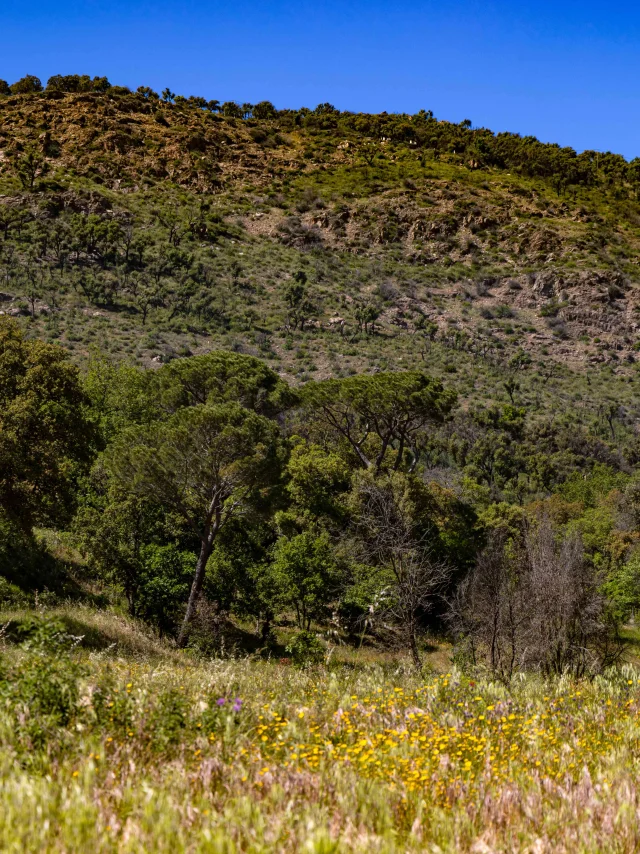
- These conditions, when combined with drought, damage vegetation and increase the risk of wildfires.
- The dangers of heatwaves
For health:
- Heatstroke and dehydration.
- Worsening of chronic illnesses (heart, respiratory, kidney conditions).
- Fatigue and heat-related disorders among outdoor workers.
For the environment:
- Dry soils.
- Water stress for wildlife and vegetation.
- Increased risk of forest fires.
For the most vulnerable people:
- Elderly or isolated people.
- Babies and young children.
- Pregnant women.
- Workers exposed to heat.
- Alert levels and official measures
- Yellow alert: monitor the situation, preventive measures recommended.
- Orange alert: confirmed heatwave, health risks for everyone, take response measures.
- Red alert: extreme heatwave, severe and widespread danger requiring exceptional measures.
There are four levels in France’s National Heatwave Plan, from level 1 (seasonal surveillance) to level 4 (maximum level).
Prefectures and local councils might activate a local plan to protect vulnerable people. - What to do during a heatwave
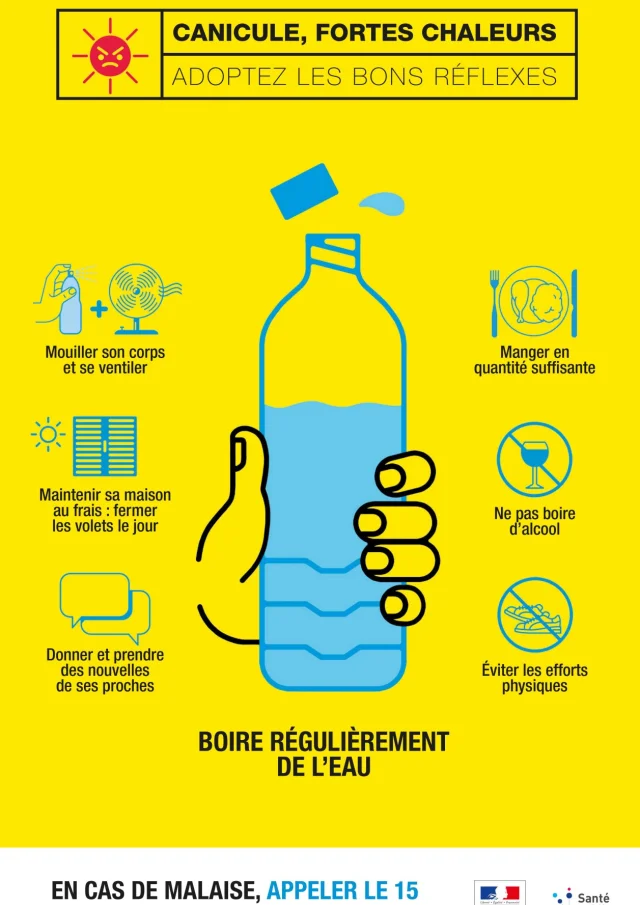
- Drink water at regular intervals, even if you’re not thirsty.
- Stay in a cool place, close shutters and windows during the day, open at night.
- Avoid any exercise during the hottest hours of the day (11am-9pm).
- Wear lightweight, loose and light-coloured clothing.
- Check in with fragile or isolated friends and relatives.
- In the event of symptoms
Warning signs: headaches, dizziness, cramps, unusual fatigue, confusion, nausea.
In the event of heatstroke (body temperature over 40°C, loss of conciousness), call 15 immediately.
While you’re waiting for emergency services to arrive, make sure the person is in the shade, remove any unnecessary clothing, cool the body down using a wet towel.
- Water restrictions during extreme temperatures
Water shortages and hot temperatures lead to drought, and water consumption in the summer can become an issue. The Ministry of Ecological Transition updates the water restrictions map on a regular basis. To find out if you’re affected, please consult the map.
- Ways you can limit your water consumption
Adopt the right habits, even on holiday:
- Use the double toilet flush correctly depending on my needs, and do not dispose of anything in the toilet.
- Use a dishwasher if you have one and only run a cycle when it is full.
- If you notice a water leak, inform the owner of the property as soon as possible.
- Take shorter showers and switch the water off when washing yourself.
Things to avoid:
- Wash my car less frequently, even if the car wash uses a water recycling system, because not all the water used is recycled.
- Reduce my meat, coffee and chocolate consumption as these products require large quantities of water to be produced and processed.
- Drought alert
What is the drought alert level in my town (Var)?
 Alerte Canicule Grimaud